In 1881, Kintaro Hattori opened a small watch shop in Ginza, Tokyo, where he sold and repaired timepieces. It was a modest beginning, far removed from the watchmaking industry we know today. Yet it marked the start of a story that would go on to shape some of the most important milestones in Japanese watchmaking. 145 years later, that small venture has grown into Seiko, one of Japan’s most influential watchmakers.
In 2026, the brand is marking its anniversary by revisiting the history that brought it here. Through three colors — gold, blue and purple — Seiko explores its identity in three limited-edition collections, each reflecting a different chapter of its past. From its founder’s pioneering vision to the cultural influence of the city where it all began, the collections tell a story in which tradition and technological innovation have never needed to exist separately.
145 years later, that small venture has grown into Seiko, one of Japan’s most influential watchmakers.


145 Years of Seiko
Before becoming one of Japan’s leading watchmakers, Seiko had to learn how to make its own timepieces. In 1892, eleven years after opening his first shop in Ginza, Hattori established Seikosha, a factory that allowed him to move beyond repairing watches and begin producing them. By 1895, he had introduced the Timekeeper, his first pocket watch. It was more than a new timepiece. It marked the beginning of a new chapter in Japanese watchmaking, one in which producing its own mechanisms would open up possibilities that had once seemed far out of reach.
Over the following decades, that ambition took many forms. The company developed mechanical watches, chronographs and even models designed to withstand the depths of the ocean. But some of its most significant breakthroughs came during the 1960s.
In 1969, Seiko introduced the Quartz Astron, the world’s first quartz wristwatch, a timepiece that changed the conversation around precision and watchmaking technology. Perhaps what makes these 145 years particularly interesting is that Seiko has never treated innovation as a reason to leave its Japanese roots behind. Quite the opposite: its history and culture have continued to offer new ways forward.

Courtesy of Seiko


Three Colors, Three Chapters of One Story
While some watchmakers celebrate their anniversaries with commemorative pieces or reinterpretations of their most recognizable designs, Seiko has taken a broader approach. Its three limited-edition collections revisit different chapters of the brand’s 145-year history. Each color offers a different perspective, connecting the watches to the traditions, technological breakthroughs and Japanese culture that have shaped Seiko over time.
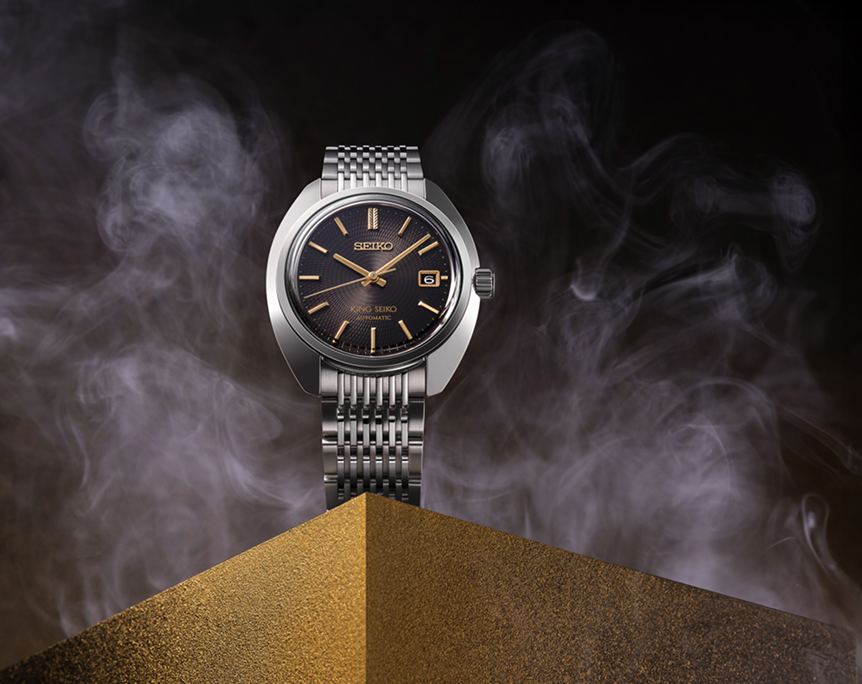
Gold takes us back to the beginning. Inspired by Kintaro Hattori’s legacy, the collection brings together four of the brand’s most established lines: King Seiko, Prospex, Presage and Astron, all featuring gold-toned details. One of its most interesting references appears in Presage, which reinterprets the 1895 Timekeeper through an onion-shaped crown, a raised bezel and a white enamel dial. Rather than reproducing a design from more than a century ago, it brings some of Seiko’s earliest design codes into the present.
Blue, meanwhile, recalls one of Seiko’s most defining decades: the 1960s. The collection revisits the signature Seiko Blue, interpreting it in different ways across the watches. King Seiko VANAC features geometric lines inspired by Tokyo’s skyline, while Prospex draws on the design of Seiko’s first diver’s watch from 1965. Presage takes a different direction with a cobalt-blue Arita porcelain dial, bringing watchmaking technology together with one of Japan’s longstanding craft traditions.
Purple draws its inspiration from Tokyo’s cultural history. During the Edo period, the color held a distinctive place in the city’s aesthetic identity. Seiko brings it into the present through models including the Prospex Alpinist, Astron GPS Solar and Presage Cocktail Time. The latter takes inspiration from Edo Murasaki, a cocktail created by Hisashi Kishi of STAR BAR, translating its character into a translucent purple dial with shimmering details reminiscent of gold flakes. It is a connection between watchmaking, design and culture that goes well beyond movements and hands.


Seiko’s story is defined not only by the watches it has created, but also by what it has chosen to preserve.
Beyond Time
After nearly a century and a half, Seiko’s story is defined not only by the watches it has created, but also by what it has chosen to preserve. From Hattori’s earliest designs and the breakthroughs that followed to the cultural references drawn from Tokyo, each collection carries a different part of the brand’s identity. And while its movements and technologies have evolved, certain elements of its history continue to find a place in contemporary designs.
That, perhaps, is what makes this anniversary particularly meaningful. In an industry where innovation is so often associated with what comes next, Seiko has chosen to look back as well. Not to remain in the past, but to show how 145 years of history can still become the starting point for something new.