Watchmaking has always had a particular relationship with the past. Beyond technical advances and increasingly complex complications lies a history of innovation, precision, and craftsmanship that continues to shape how we understand time. A heritage that has never stood still, but continues to find new ways of expressing itself.
And while their stories began in very different places, Arnold & Son and Angelus share something in common: an approach to watchmaking that remains closely connected to their origins. Their latest creations, the DSTB Stop-Seconds and the Chronographe Tachymètre, revisit the mechanisms and design codes that have defined each house, bringing them into a distinctly contemporary setting.
Arnold & Son and Angelus share something: a way of understanding watchmaking that never stops looking back to its origins.
Two Watchmakers, One Contemporary Vision
Not every watchmaker has followed the same path. Some built their reputations by overcoming technical challenges. Others found opportunities to develop their expertise through particular disciplines. And although the industry has changed considerably since then, certain elements remain recognizable decades, or even centuries, later.
That is certainly true of Arnold & Son and Angelus, two watchmaking houses that have managed to preserve much of their history without simply recreating it. The former remains closely associated with marine chronometry, while the latter draws on its ties to motorsport and the chronographs that shaped different chapters of its history. Two very different starting points that help explain why their latest watches are about much more than design.
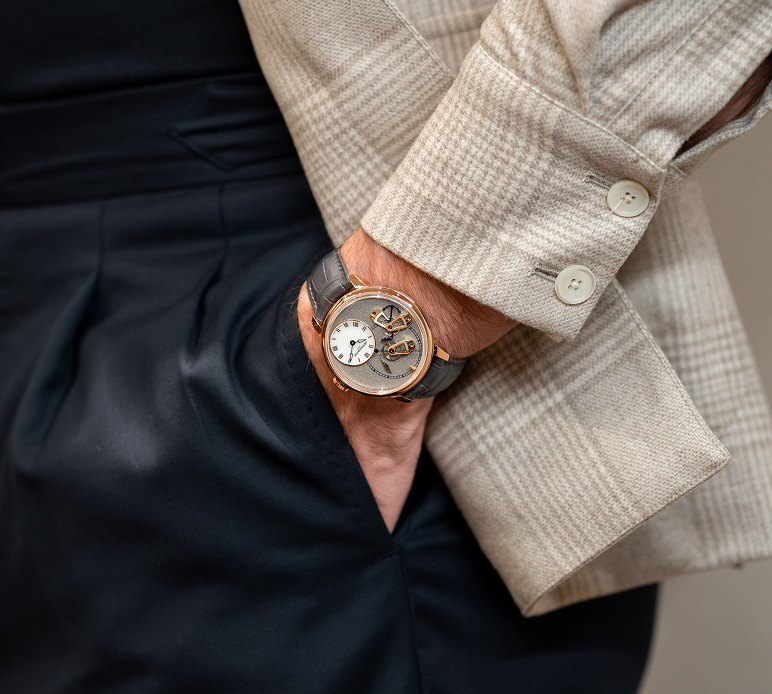
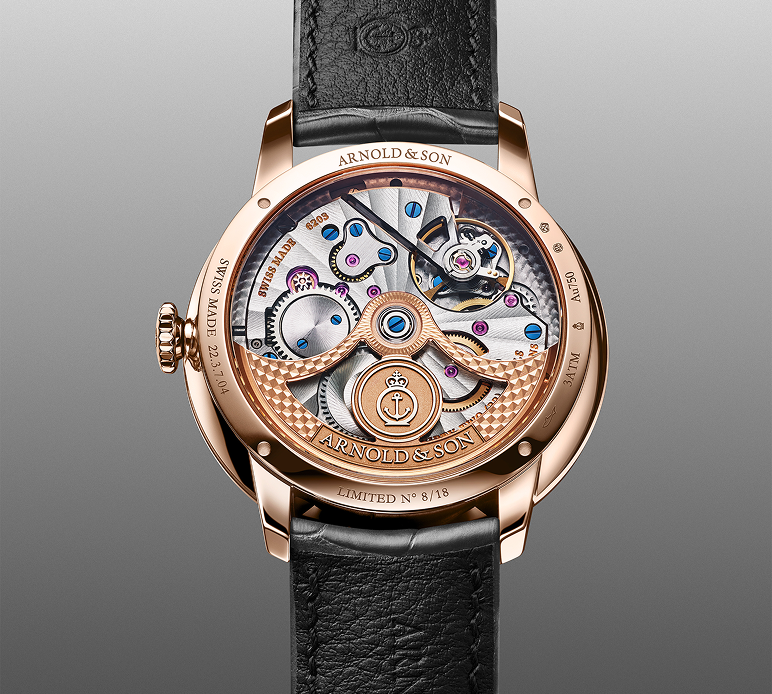
Arnold & Son x DSTB Stop-Seconds: Precision Born at Sea
To understand the new DSTB Stop-Seconds by Arnold & Son, we have to go back to the 18th century, when determining a ship’s position in the middle of the ocean depended largely on the accuracy of its instruments. A difference of just one second from Greenwich Mean Time could result in a navigational error of more than 460 meters. It was against this backdrop that John Arnold became one of the leading figures in marine chronometry, establishing a legacy that remains central to the watchmaker’s identity today.
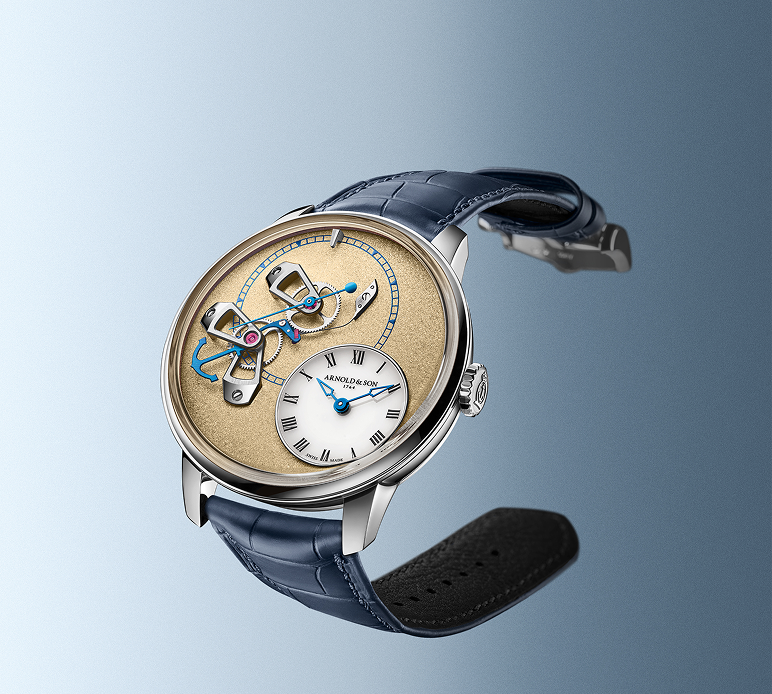
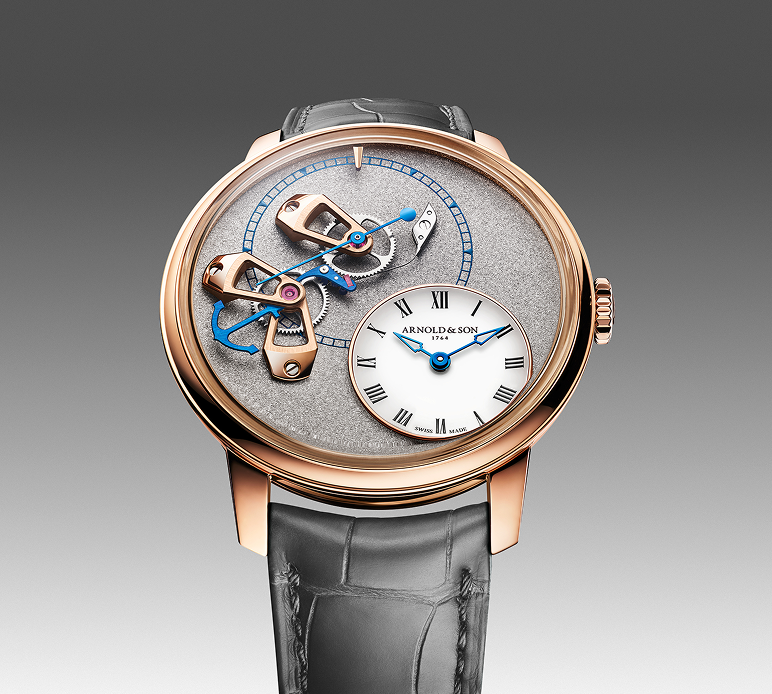
More than two centuries later, that heritage returns with the DSTB Stop-Seconds Red Gold Cliff Grey and Platinum Kingsand. Both versions feature a deadbeat seconds complication, which allows the seconds hand to advance in precise, one-second jumps. Part of the mechanism is visible directly on the dial, while an additional stop-seconds function allows the wearer to halt the hand and set the time more accurately. Two features that recall a time when measuring every second precisely could make all the difference at sea.
Perhaps what makes these watches particularly interesting, however, is the way their mechanical complexity shares the spotlight with their design. Both feature 42 mm cases and automatic movements with a 55-hour power reserve, with the main differences found in their materials and finishes: one in 18-karat red gold, the other in platinum. Limited to just 18 pieces per version, they share the same watchmaking architecture while offering two distinctly different visual identities.
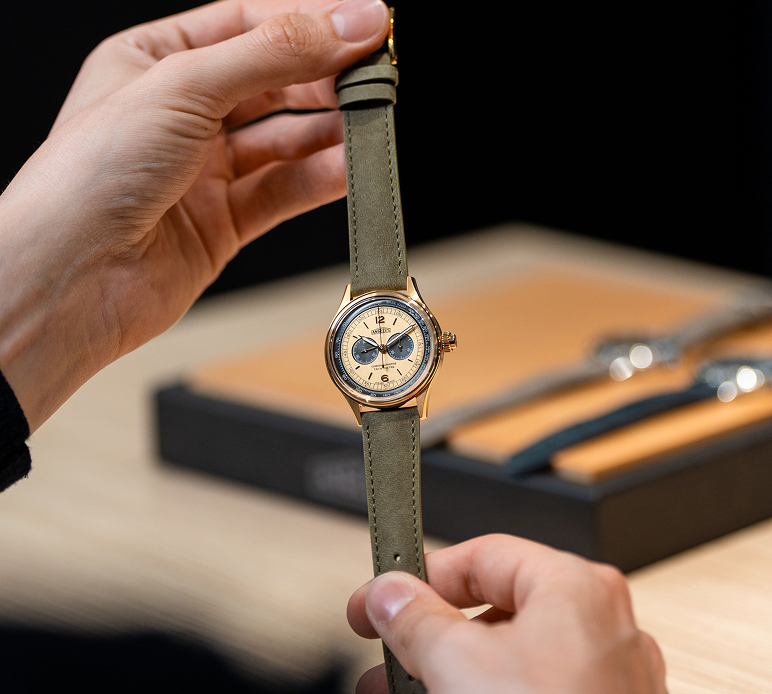
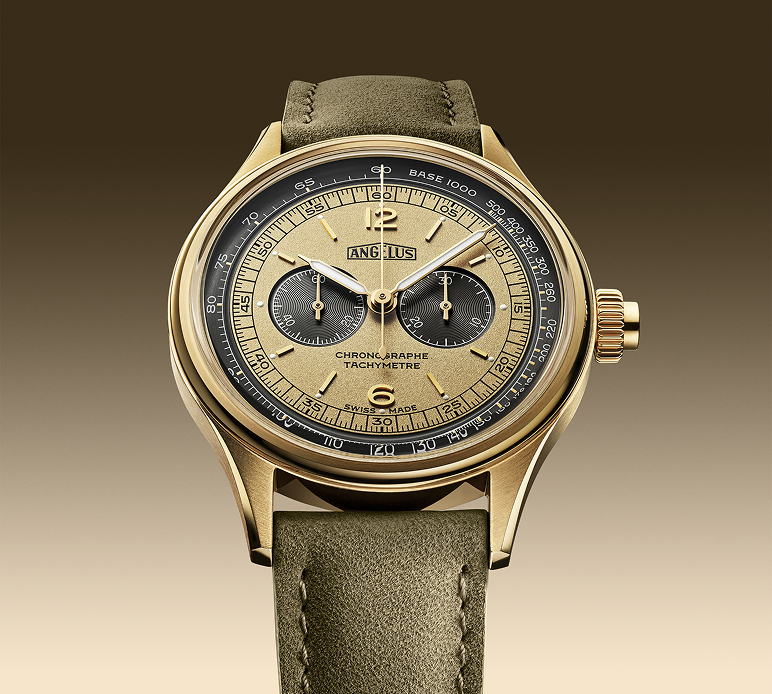
Angelus x Chronographe Tachymètre: Time Behind the Wheel
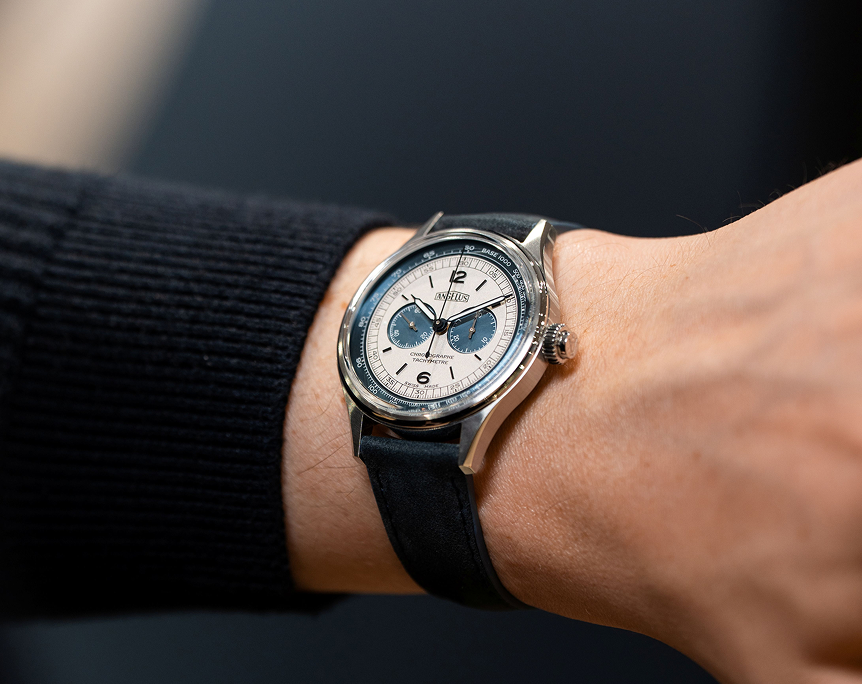
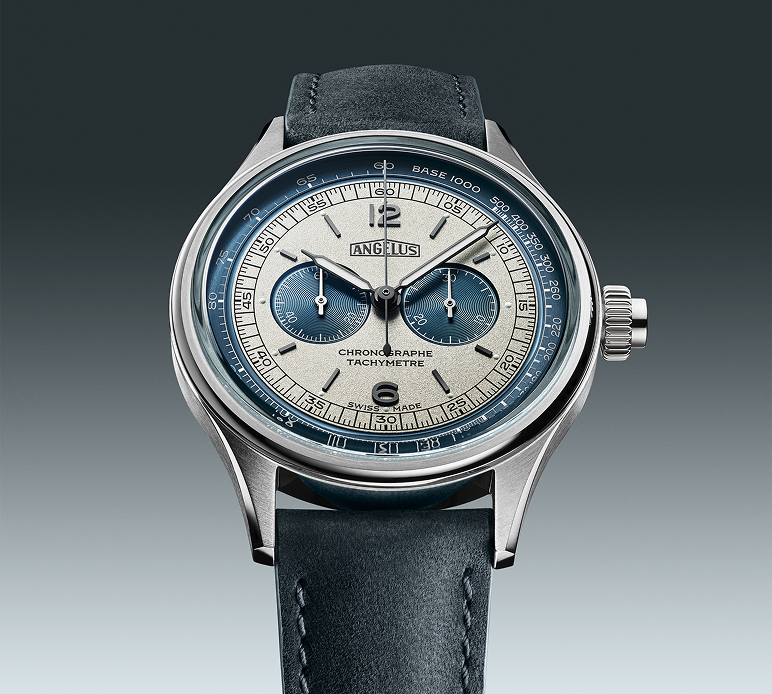
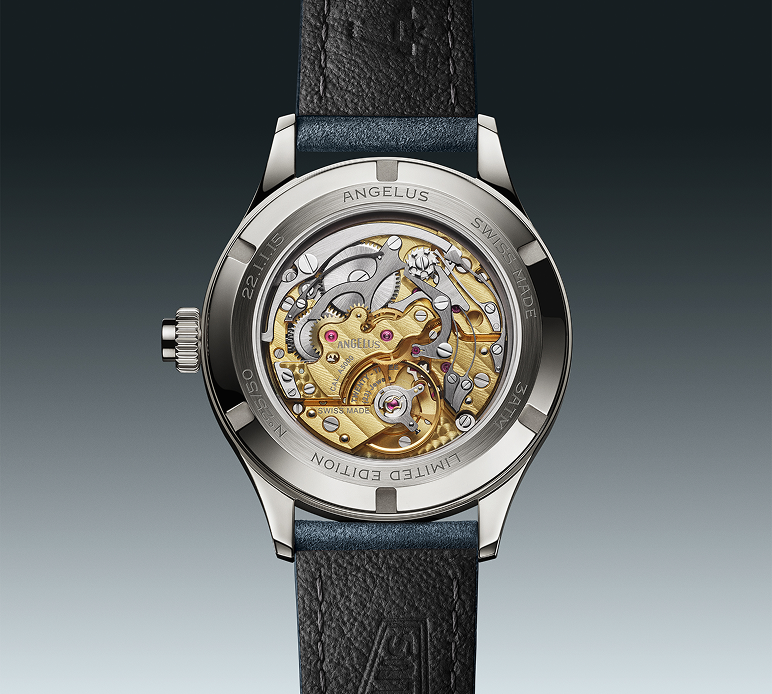
While Arnold & Son looks to the great maritime voyages of the past, Angelus takes us somewhere entirely different: the world of motorsport. Founded in Switzerland in 1891, the watchmaker revisits the aesthetics of its chronographs from the 1930s through the 1950s with the new Chronographe Tachymètre, a timepiece that brings vintage influences into contemporary watchmaking.
There is certainly something appealing about its sandblasted dial, Arabic numerals, and proportions reminiscent of chronographs from another era. But beyond its appearance, perhaps its most interesting feature is the tachymeter scale, which allows speed to be calculated based on the time taken to cover a set distance. Housed in a 37 mm case measuring just 9.25 mm thick, the watch is powered by the hand-wound A5000 caliber, offering a 42-hour power reserve. The Chronographe Tachymètre was also awarded Best Chronograph at the 2025 Grand Prix d’Horlogerie de Genève.
Color plays an equally important role in its design, with three combinations inspired by classic motorsport: yellow gold with British racing green, steel with coral pink and gray, and steel with pearl gray and petrol blue. Three interpretations that retain a distinctly vintage character, yet have enough personality to catch the attention of even the most discerning collectors.
Epilogue
Two watchmakers, two histories, and two very different approaches to precision. Arnold & Son and Angelus remind us that watchmaking is not simply about developing new technologies, but also about gaining a deeper understanding of those that shaped its history.
And perhaps that is where their heritage takes on new meaning. In seeing how something originally developed to solve a problem decades, or even centuries, ago can still have a place in the present. After all, the history of watchmaking has also been shaped by our desire to understand, measure, and, in some ways, master time.