
What could ten years of Formula 1 and centuries of Mexican history possibly have in common? At first glance, probably very little. And yet, TAG Heuer finds in both worlds the starting point for a new statement about the way it understands watchmaking. Two launches that do more than revisit chapters from its history, finding new ways to give them meaning.
On one side, there is an object of desire celebrating a decade of one of the brand’s most emblematic partnerships in motorsport. On the other, a watch that finds in gold a different way to pay tribute to Mexico. Two pieces with completely different personalities that remind us that behind every dial, there are also stories worth telling.
Before Becoming an Icon
To talk about TAG Heuer is, inevitably, to talk about motorsport. For decades, the Swiss watchmaker has taken its relationship with speed far beyond the stopwatch. Today, its presence extends across every Formula 1 circuit, but its history with precision began much earlier. From its earliest advances in timekeeping, the manufacture helped transform the way increasingly smaller intervals of time could be measured. A specialization that, over the years, would also come to shape its visual identity.
From that history came collections we now recognize almost instantly. Carrera arrived in 1963, inspired by the world of motor racing, while Formula 1 debuted in the 1980s with a more accessible, colorful and sporty proposition. Two different moments in TAG Heuer’s history that now meet again through new releases.
A legacy is not built only by looking back, but by deciding what to do with everything that brought us to the present.
Formula 1 Solargraph x Oracle Red Bull Racing: A Decade on the Track
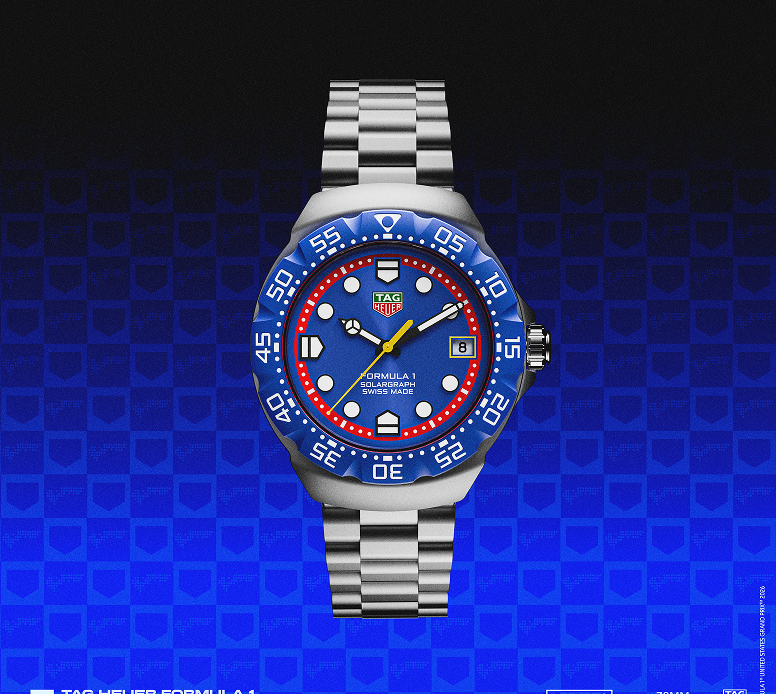
In Formula 1, ten years can mean many things. Victories, championships, driver changes and, of course, watches that tell far more than seconds. Since 2016, TAG Heuer has accompanied Oracle Red Bull Racing through a decade of evolution both on and off the track. Today, that relationship finds a new way to celebrate itself. The Formula 1 Solargraph x Oracle Red Bull Racing arrives as a special edition that not only brings back the team’s colors, but also nods to the first Formula 1 watches of the 1980s.
A blue dial, a red minute scale and a few yellow accents create a combination that feels instantly familiar to true motorsport fans. Here, the team’s visual codes are translated into a 38 mm sandblasted steel case, with a rotating TH-Polylight bezel and the Oracle Red Bull Racing logo engraved on the caseback. Inside is the Solargraph TH50-00 movement, powered by either natural or artificial light. Just one minute of direct sunlight provides enough energy for a full day, while a complete charge delivers up to ten months of autonomy in darkness. A technology that seems to share something with the spirit of Formula 1: making the most of every resource to go just a little further.

Golden Heritage: A Tribute to Mexico
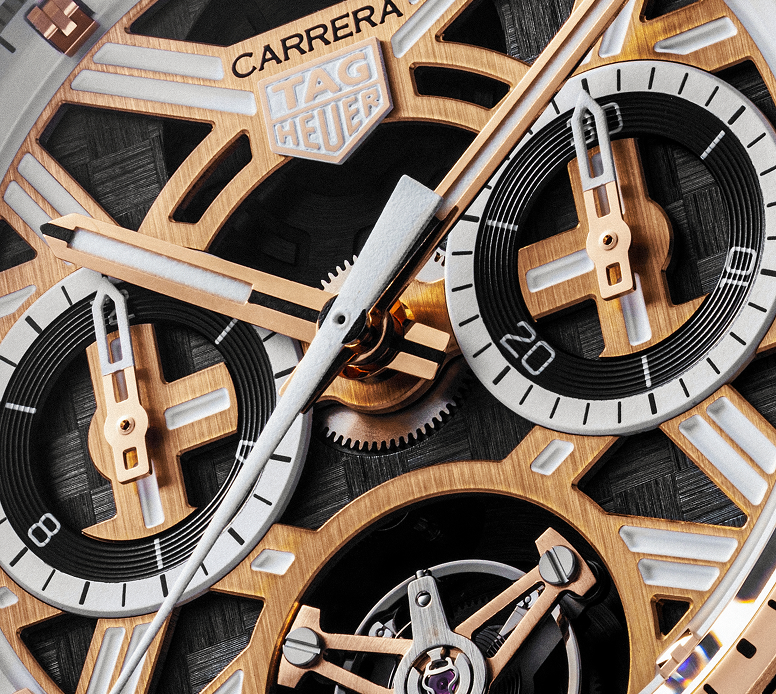
Mexico has inspired many pieces within the world of watchmaking. Some revisit our traditions, while others find references in art, history or the colors of our identity. But for TAG Heuer, the starting point was something far more specific: gold. A material that has been part of our history for centuries and that now takes center stage in the Carrera Extreme Sport Golden Heritage, a limited edition created exclusively for Mexico.
And when it comes to design, contrast is precisely what gives this piece its personality. Its 44 mm case combines titanium and 18-karat rose gold, black details and a white rubber strap that breaks away from the aesthetic we normally associate with a gold watch. Through its skeletonized dial, the TH20-09 calibre reveals a one-minute tourbillon, alongside chronograph functions and a 65-hour power reserve. A piece that finds its connection to Mexico without relying on the most obvious symbols of our culture. This time, the tribute lies not in what is depicted, but in the material chosen to express it.

Epilogue
Two watches. One conversation. The celebration of ten years of motorsport and a reference to centuries of Mexican history. Yes, perhaps two worlds with very little in common, yet in 2026 they find a shared space within Swiss watchmaking. Because although their designs, mechanisms and inspirations are completely different, both reveal that TAG Heuer’s identity is not limited to a single way of understanding watchmaking.
After all, a legacy is not built only by looking back, but by deciding what to do with everything that brought us to the present. Perhaps that is why we continue to pay attention to every TAG Heuer release. Because the idea behind a watch goes far beyond adding another model to a collection; it is about continuing to find reasons for a watch to still have something new to say, even after more than a century.